Image of a mint leaf on fire

Mint Under Fire

Last week, Nancy Clark, President of Verizon Value Markets, wrote on LinkedIn about one of the most aggressive promotions I’ve seen in this industry:

Yesterday, T-Mobile’s subsidiary Mint Mobile announced that if AT&T and Verizon customers switch to Mint Mobile, they can buy one three-month plan for $45 and get up to four additional lines at what they called ‘free.’ What they didn’t mention was that this only applied for the first three months and that there were added taxes and fees charged to the customer for each line.

At Visible, not only do we provide better value, but we do it 365 days a year. No gimmicks and no hidden fees. Today, we’re giving all T-Mobile single line customers the chance to bring their number over to Visible and get the Visible plan for $15 per month with a 5-year price guarantee, taxes and fees included…Give us a shot and use the code BYEBYETMO for this amazing offer.

Visible’s $15 per month pricing is awfully competitive, but the 5-year guarantee is more unusual.

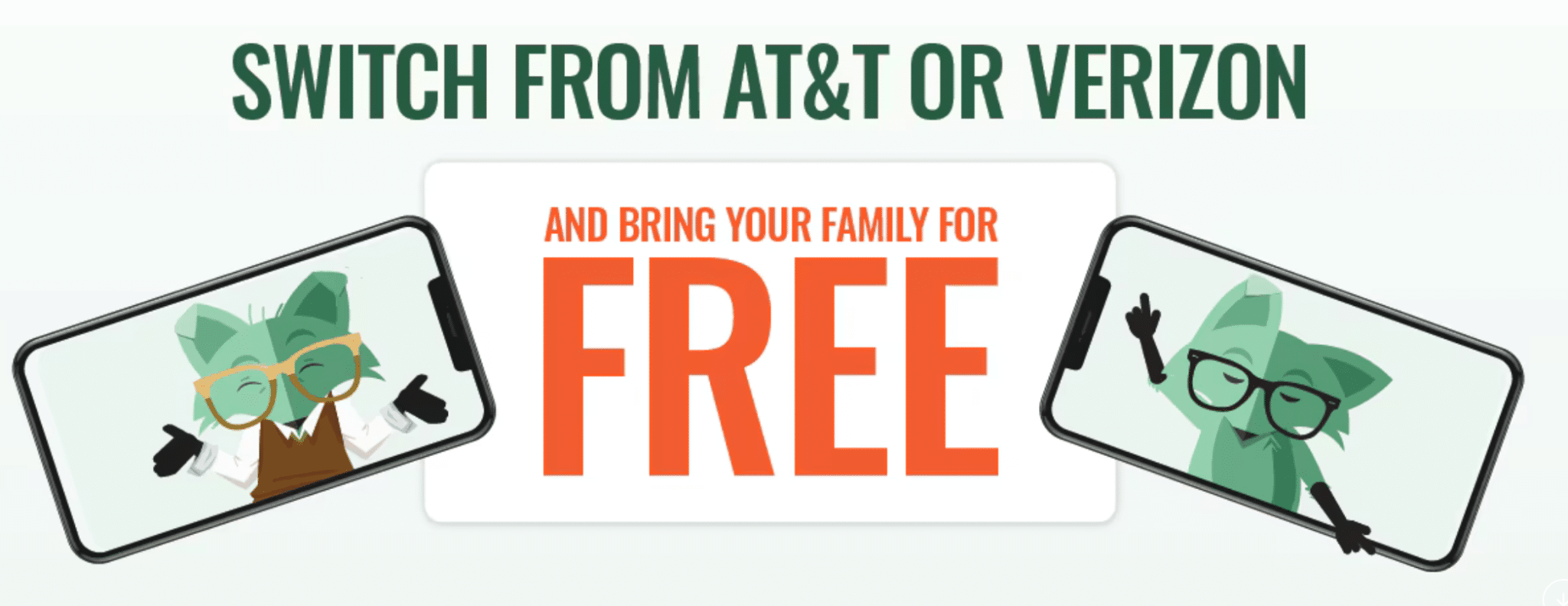
Was Mint being as deceptive as Clark suggests? T-Mobile’s press release about Mint’s promo opens audaciously with this image: Image from T-Mobile's press release that includes Mint Mobile brand images and 'Switch from AT&T or Verizon and bring your family for free'
However, a sentence in the first paragraph of the press release clarifies the terms (emphasis mine):

Starting today, buy one Mint Mobile plan (PS plans start at $15/month) and get up to four additional lines at no cost for three months.

Mint tends to describe its promotions boldly with a headline, then walks back a bit when explaining promotions’ terms. At a recent conference, MobileX took a clever shot at Mint for this behavior:
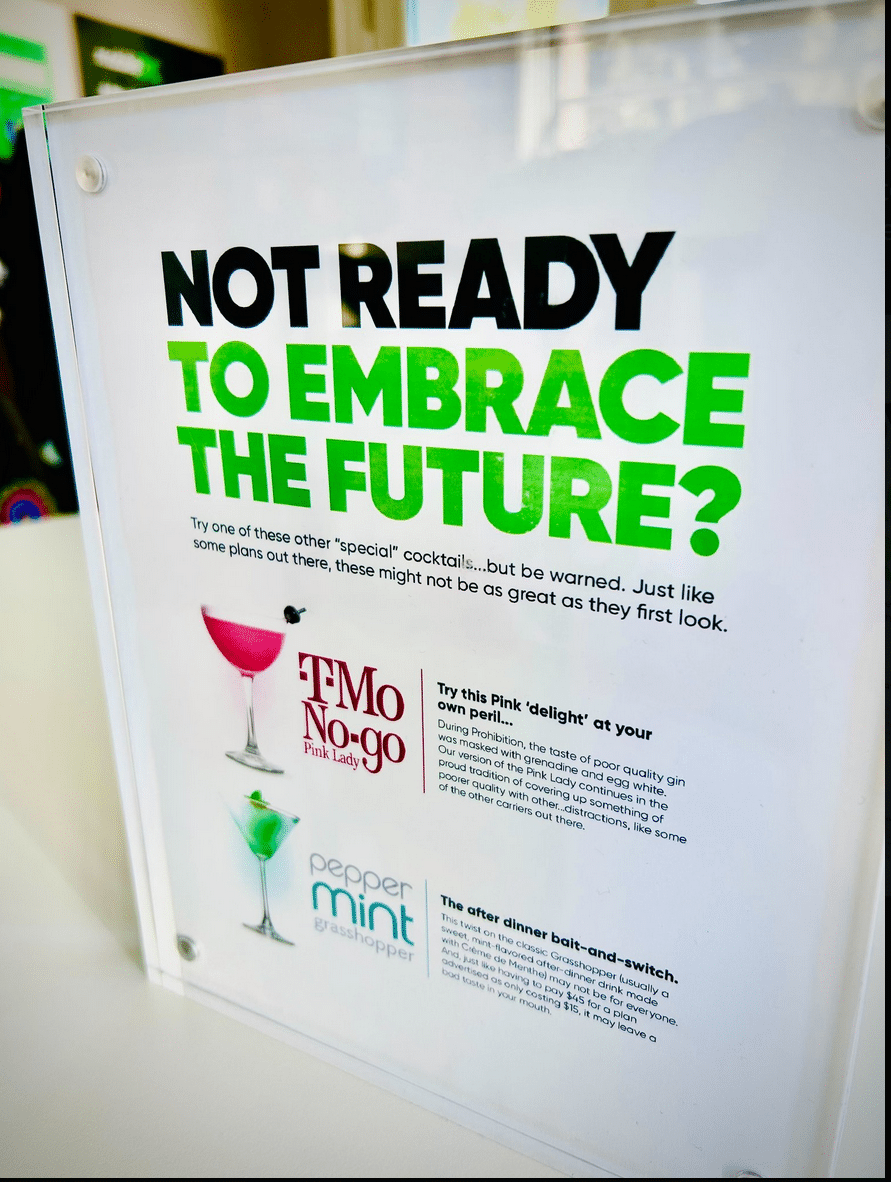
Image listing cocktails MobileX was offering. Cocktails are described in ways that poke fun at MobileX's competitors.
“The after dinner bait-and-switch…just like having to pay $45 for a plan advertised as only costing $15, it may leave a bad taste in your mouth.”

Abstract icon representing the idea of a refresh or an update

Visible+ Plan Gets Updates

Visible just made three upgrades to its Visible+ plan:

  • Hotspot speeds doubled (now 10Mbps)
  • Smartwatch support is now included with no extra charge
  • One free Global Pass day per month

The plan’s regular price of $45 per month is unchanged. However, these upgrades may lead Visible to run fewer promotions that bring the plan’s cost down. Several times in the last year, the Visible+ plan was available for only $35.

Reflections

Most people won’t use the no-cost smartwatch service, but it’ll mean $5-$10 per month in savings for people who would have purchased a smartwatch service plan. I wonder if we’ll eventually see other players in the industry offer the same perk. Once carriers have the infrastructure to support cellular smartwatches, the incremental cost of providing connectivity for a watch should be awfully low.

The old hotspot speed of 5Mbps on Visible plans was acceptable, but 10Mbps may offer tangible improvements for people running their laptops’ internet over cellular hotspot connections.

The monthly Global Pass is good for 24 hours of roaming service in over 140 countries and territories. Service includes calls, texts, and up to 2GB of full-speed data. It’s a good perk, but subscribers can’t bank multiple passes over multiple months. Realistically, a one-day pass will be insufficient for most international trips.

Photo representing the concept of "update"

Visible Updates

Last week, Verizon’s flanker brand, Visible, launched a major update. Previously, Visible offered only one plan. The plan included unlimited minutes, texts, and data. It had a base price of $40 per month, but the price dropped as low as $25 with Visible’s Party Pay program.

With Visible’s latest update, the carrier is retiring Party Pay and offering two plans:

  • Visible’s standard plan: $30 per month
  • Visible+ plan: $45 per month

Standard Plan

Visible’s standard plan includes unlimited minutes, texts, and data. As was the case with Visible’s old plan, data is low priority. Subscribers may experience slower speeds than other users on the network during periods of congestion.

With Visible’s standard plan, subscribers can access Verizon’s LTE and 5G Nationwide services. (5G Nationwide is Verizon’s term for it’s low-frequency 5G service. 5G Nationwide has extensive coverage, but the speeds may fall short of the hype around 5G.)

Visible+

The Visible+ plan has a $15 per month premium and comes with a few extra perks. The first 50GB of data each month is high priority. Additionally, subscribers can access Verizon’s Ultra Wideband service, which offers better performance in some places. Visible+ also includes international texting and calling to some destinations.

Network Improvements?

A common complaint about Visible is that latency with the service can be substantially worse than latency on a Verizon-branded plan. I don’t understand all the details, but Visible has historically had some underlying infrastructure that differs from Verizon’s typical infrastructure. A press release covering the recent changes suggests some improvements are on the way:

Existing members can move to these new plans at any time through their Visible account. A new SIM will be required, as Visible is also expanding coverage and upgrading the core network routing experience in conjunction with these plans, which should provide customers with improved speeds and latency.

Existing Customers

For the moment, existing customers can continue with the old plan and Party Pay rates as low as $25 per month. Here’s another bit from the press release:

Existing Visible members have the option to maintain their Party Pay discount while on their current plan and will have their Party Pay rates locked in based on their Party status as of October 18, 2022.

It looks like Visible will force all subscribers to transition to the new plans (and abandon Party Pay) around the start of 2023.

My Take

While service will increase from $25 to $30 for many users, I think most of these changes are great. Party Pay has always been a bit weird, and part of me is glad to see it going away. Perhaps its retirement will pave the way for Visible offering better options for family plans or combined billing.

While low-priority data is fine for many users, it can be a pain in some regions or for subscribers that want peak performance. I’m glad Visible is giving customers the option of paying up for a better experience.

While I’m unsure what the changes to Visible’s routing system entail, I’m hopefully that between (a) those upgrades, (b) high priority data, and (c) Ultra Wideband access, Visible+ will offer service on par with Verizon’s premium plans.

I’m somewhat surprised that the standard Visible plan doesn’t include access to Verizon’s Ultra Wideband. I expect that will change eventually. Dropping restrictions on who can access Ultra Wideband will lead to more efficient use of Verizon’s network capacity and spectrum. If Verizon wants different tiers of service quality, it can throttle or deprioritize Ultra Wideband service on low-cost plans.

For incoming subscribers wondering whether to choose Visible’s standard plan or Visible+, my advice at the moment is to start with the standard plan. You can always consider upgrading if you regularly find yourself with decent signal strength but lousy speeds.

Paint roller being used to repaint

Visible’s “By Verizon” Rebrand

Visible, Verizon’s low-cost flanker brand, has been making its connection with Verizon more explicit. Here’s how the Visible logo used to appear on the header of its website:

Recently, the words “by Verizon” have been tacked on:

Visible logo showing the words "by Verizon"

The new branding suggests a change in strategy. Previously, Visible was coy about its relationship with Verizon. That was almost certainly by design. A major carrier doesn’t want its low-cost brands to cannibalize the higher-profit subscribers of the mainstream brand.

While it was never difficult to figure out that Verizon owned Visible, I expect a fair share of the carrier’s subscribers were unaware. With Visible’s relationship to Verizon now in the front and center, Visible may be more appealing to consumers. On the other hand, the rebranding may lead to pressures to create further discrepancies between the service quality received by Visible’s subscribers and Verizon’s direct subscribers.

eSIM abstract

Visible Launches eSIM Free Trial

Verizon’s flanker brand Visible just launched an eSIM free trial program. The trial offers 15 days of Visible’s standard plan with unlimited minutes, texts, and data. At the moment, it’s only available for recent iPhones (iPhone XR/XS and newer iPhones). No payment information is needed to sign up.

Sign-up Process

The sign-up process took me about ten minutes. I scanned Visible’s QR code, got the Visible app, and followed some straightforward instructions. I had to provide an email, but I wasn’t required to jump through hoops or provide billing information.

Multiple Numbers

Visible assigns a temporary number to each eSIM. If you join Visible after the trial, you can keep the temporary number or port in an existing number.

If you’d like to use multiple numbers in tandem during the trial (e.g., you want to trial Visible but also keep running your normal number and service), it’s easy. During setup, trial users select which SIM card should be used for each of three different services:

  • Regular calls & texts
  • iMessage
  • Data

In most cases, I’d suggest people trialing Visible let their original SIM card handle calls, texts, and iMessage while Visible handles data.

A Preview Of Things To Come?

Visible’s trial highlights how eSIMs could make the market for cell service more consumer-friendly. Potential Visible subscribers often wonder whether a low-price service can really offer good performance. Some people question whether congestion will lead to lousy speeds since Visible doesn’t get high-priority data. Now that Visible has a trial, there’s no need for guesswork.

Eligibility Details

The iPhone XR/XS and more recent iPhones running iOS 14+ are eligible for the free trial. Support for eSIM devices running Android is supposedly coming soon. Here’s how Visible responds to an FAQ entry about eligibility:

Anyone who is not currently a Visible member, or someone that has not participated in the trial in the past 12 months. If you meet these criteria, then all you need is an eligible iPhone device with eSIM capability to participate.

Full List Of Eligible Devices

  • iPhone SE (second generation)
  • iPhone 13
  • iPhone 13 Pro
  • iPhone 13 Pro Max
  • iPhone 13 mini
  • iPhone 12
  • iPhone 12 Pro
  • iPhone 12 Pro Max
  • iPhone 12 mini
  • iPhone 11
  • iPhone 11 Pro
  • iPhone 11 Pro Max
  • iPhone XR
  • iPhone XS
  • iPhone XS Max
A red flag

Service Outage At Visible

Verizon’s flanker brand Visible has had a rough time the past few weeks. First, a security issue caused trouble for a large number of subscribers earlier this month. Then yesterday, reports of a service outage started to surface.

Several Reddit posts and dozens of comments mentioned the outage. I’m not sure how much of Visible’s subscriber base was affected.1 The issue was widespread enough for Visible to acknowledge the issue on Twitter:


Reports suggest the outage only lasted a few hours. Shortly after sharing its initial tweet, Visible noted that the outage was resolved:

I haven’t heard anything about the underlying cause of the outage.

Update icon

Visible Security Update

Earlier today, Visible shared a few tweets with updates on the security issue I posted about yesterday. Here’s the important bit:

Our investigation indicates that threat actors were able to access username/passwords from outside sources, and exploit that information to login to Visible accounts.

Taking Visible at face value, it looks like the attacker is exploiting information leaked in an unrelated data breach.1 Consequently, I’m not sure it’s entirely accurate to say Visible was hacked.2

I’m not sure what end game the attacker has planned. It sounds like many people are seeing fraudulent phone orders charged to the billing information on file in compromised accounts. Even if the fraudulent orders are fulfilled, it should be easy for Visible to track down the culprit. After all, the company knows where each phone is sent. Maybe I’m missing something.

Spitballing, I came up with a few possibilities:

  • Fraudulent orders could be a red herring to distract from the attacker’s real goal.
  • Multiple attackers could be working independently with the same compromised data.
  • An attacker could compromise numerous accounts and send phones to a large number of addresses. If only a small portion of the addresses were under the attacker’s control, it would be difficult and expensive for Visible to track down the attacker.

I don’t find any of these possibilities particularly likely. It’ll be interesting to see how this plays out.

A lock

Visible Will Lock Phones For 60 Days

On Friday, Verizon’s flanker brand Visible announced that it will lock phones customers purchase from its online store for sixty days. Phones will automatically unlock after sixty days of service with Visible.

The announcement mentioned an exemption to the rules for members of the military. While Visible suggests customers can make international calls while a phone is locked, rules around international roaming aren’t made explicit:

Locked devices will still work as normal on Visible, and will still be able to make calls internationally to Canada, Mexico, US Virgin Islands, and Puerto Rico. And for those serving in the military, Visible will be able to unlock devices before the 60 day period if you are being deployed outside of the Visible service area.
I’m inclined to think Visible’s locked phones won’t work by default with international carriers.

My take

The updates to Visible’s policy are reasonable. Without the policy change, Visible would be at higher risk of people taking advantage of promotions that incentivize new customers. Before Friday’s announcement, I think Visible only locked phones customers acquired through the carrier’s swap program.

5G city image

Visible Rolling Out 5G For iPhones

Visible, a flanker brand of Verizon, has just started rolling out 5G service. Yesterday, a Reddit user posted a screenshot showing an iPhone running over Visible’s service with a 5G connection.

At this time, it looks like Visible’s 5G service is only available to customers with devices in the iPhone 12 line that are running iOS 14.3. Here’s an excerpt from a Q&A on Visible’s website:

You’ll need the most up-to-date iOS software and carrier bundle for your device before you can experience 5G. Remember, we only offer 5G on iPhone 12 at the moment, and you’ll need to be in a 5G area to experience 5G.

It looks like Visible has updated its coverage map to show areas where 5G is available. As expected, Visible’s 5G coverage looks essentially identical to Verizon’s 5G coverage.

Now that Visible’s 5G has launched for iPhones, I don’t think it will be long before the carrier launches 5G service for some Android devices.

Visible’s Plans For 5G

Visible, a flanker brand of Verizon, just shared details about its plans for 5G service (hat tip to Dennis Bournique who tweeted about the news).

Visible will soon offer 5G service for phones in the iPhone 12 line. 5G service for some Android phones will be available a bit later.

5G won’t cost extra, but Visible suggested it may impose a speed cap (emphasis mine):

We believe that people deserve a better phone service experience, which is why we’re including 5G, with speeds up to 200 Mbps, as part of our core plan at no additional cost. No hidden fees, no forcing you to upgrade into a different, secretly-more-expensive plan.

I’m not confident the 200Mbps cap will be enforced, at least initially. In the past, Visible mentioned a 5Mbps limit on hotspot speeds, but the company didn’t strictly enforce the limit.

It looks like Visible’s 5G service will include both Verizon’s sub-6 5G and Verizon’s millimeter wave 5G:

At launch, 5G will be available for Visible members where Verizon 5G coverage is available.